
Wednesday, October 21, 2026
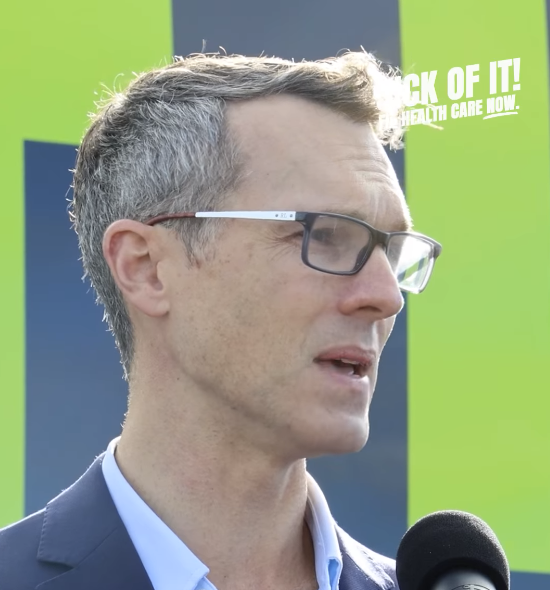
U.S. Rep. James R. Walkinshaw (D)

Arthur G. Purves (R)

Dianne L. Blais (G)
Member, US House of Representatives — 11th District
The Connection Newspapers invited candidates on the ballot for Virginia’s 11th Congressional District race — Democratic incumbent James R. Walkinshaw, Republican challenger Arthur G. Purves and Green Party challenger Dianne L. Blais — to participate in our 2026 Voter Guide. We asked candidates about issues facing our region, including local housing affordability, transit infrastructure, federal job protections and regional utility regulation. We capped responses at 500 words. Candidates appear in the official ballot order set by state election officials.
RESPONSES
Candidates for U.S. House of Representatives, 11th District
U.S. Rep. James Walkinshaw (D)
Incumbent
Q1 Housing & Zoning: Every American who works hard and plays by the rules should be able to live the American dream, which includes having an affordable home and the opportunity to own a home. On the Board of Supervisors, I worked to put together the complicated financing and approval necessary to build new, affordable housing. In Congress, I’ve supported bipartisan legislation like the ROAD to Housing Act and worked closely with local officials to help meet our local affordable housing goals.
Q2 Transit & Infrastructure: In my first year in Congress, I secured $13.4 million for Northern Virginia transportation projects, including $3.15 million for safer roads and $2 million for the W&OD Trail. After leading the regional Transportation Planning Board and VRE Operations Board while on the Board of Supervisors, I am now fighting in Congress for increased federal funding for Metro, stronger rail and bus investments, and Safe Streets and Roads for All grants to reduce congestion and protect pedestrians, bicyclists, and drivers.
Q3 Federal Workforce & Economy: Our district is home to more than 60,000 federal workers, along with even more federal contractors. They are essential to our economy and to delivering the services Americans rely on. I founded and co-chair the Federal Workforce Caucus, a bipartisan group working to protect federal workers, contractors, and our merit-based civil service. Right now, we're fighting mass layoffs, agency dismantling, and efforts to politicize civil service positions. During last year’s shutdown, I helped block the Trump Administration from illegally firing 4,000 federal workers. I introduced legislation requiring congressional approval before a President could carry out reorganizations that slash jobs or budgets or outsource core government functions.
Q4 Energy Grid & Utility Rates: I support coordinating local governments, state regulators, and utilities on infrastructure and environmental standards. Electricity prices are up 13% since Trump returned to office, and families face additional utility rate increases. I’ll push for oversight to ensure new grid costs are not shifted onto residential ratepayers and fight to restore clean energy investments cut by the “Big Beautiful Bill.” I also support Governor Spanberger’s intervention in the proposed Dominion-NextEra merger. If the proposed merger does not protect ratepayers and lower costs, it should be rejected.
______________________
Arthur G. Purves (Republican)
Q1 Housing & Zoning: The federal government is broke. The Social Security trust fund goes broke in six years. With $2 trillion annual deficits and $1 trillion for interest on the debt, any increases in federal spending, even for housing, mean high interest rates and inflation. Despite decades of affordable housing subsidies, housing affordability is worse than ever. The solution is local. If you want affordable housing, let the private sector build more housing. Government regulations account for an average of 32% of total multifamily development costs.
Q2 Transit & Infrastructure: The federal government is also running out of money for transportation. However, there is a solution. The government spends trillions on the chronic disease epidemic caused by ultra-processed food. Eating real food would reverse chronic disease and save trillions in federal spending. Government – and households – are being bankrupted by Big Food that makes us sick and Big Med that profits from chronic disease and has no financial incentive to cure us.
Q3 Federal Workforce & Economy: The region is facing a “crisis without precedent,” according to the Northern Virginia Chamber of Commerce. That the Fairfax economy relies on one sector – federal government – is the result of decades of bad governance. To attract businesses, lower taxes. But local Democrats have been raising taxes for decades. As a county supervisor, Walkinshaw voted to raise real estate taxes $2,000 in 4 years, and he voted for the meals tax.
Q4 Energy Grid & Utility Rates: It is hypocritical of Democrats to criticize high gas prices due to the Iran war. Democrats deliberately raise gas and oil prices to promote green energy. Governor Spanberger rejoined the Regional Greenhouse Gas Initiative (RGGI), a carbon tax, which adds $10 to the monthly electric bill. Virginia Democrats indexed the gas tax to inflation, so gas taxes increase every July 1. Democrat carbon caps have shuttered numerous refineries in California, which has the highest gas prices in the nation($5.65/gallon). What Democrats have done to Virginia and California energy prices, they will do to the nation if they win control.
______________________
Dianne L. Blais (Green Party)
Q1 Housing & Zoning: Because my GreenUS efforts aim to allow money to stay in the US, increasing tech research, hopefully creating a new money system to stop inflation and implementing land value tax to stop the increasing disparity between the rich and poor, the number of low-income people would be greatly decreased. The need for vouchers, grants, and tax credits would be greatly decreased. All residents would be housed based upon family size.
Q2 Transit & Infrastructure: My GreensUS program would emphasize free and low-priced public transit to encourage decreasing those needing cars. A world-class train system throughout the US would be a major goal. Transit would utilize modern technology so that accidents would be greatly decreased.
Q3 Federal Workforce & Economy: A Green DOGE would review all positions eliminated by DOGE. Hopefully much of the expertise and scientific know-how lost by DOGE can be again put in place.
Q4 Energy Grid & Utility Rates: AI has many wonderful and horrible repercussions. An intensive review is needed while there is a moratorium on data centers. GreenUS is anti data centers for the many anti-green environmental effects. A GreenElectric commission would consider improving the electric grid in the US, hopefully establishing the best technology to collect electrical power – probably solar or fusion.